
Why the Trust Signal Insights Snapshot?
In a crowded market how does a business stand out as the obvious choice?
People, AI, and search engines all chose the business with the strongest proof the claims they make are true
That proof is your Trust Signals
So, how strong are your Trust Signals?
Find out with the Trust Signals Snapshot
Your Trust Signals are the proof
that helps customers choose you.
So how clearly does your business
Signal Trust?

Businesses often struggle to attract enough customers, even when they know they do good work.
…And the frustrating part is not knowing why.
The Trust Signals Snapshot examines the claims your business makes and the evidence customers use to decide whether those claims are believable. Then it compares your Trust Signals with the top businesses in your market to reveal where confidence is being built, where it’s being lost.
Instead of another list of marketing tactics to try, you get a clear picture of what’s actually helping you get chosen, what’s getting in the way, and what to improve first.
What this means is you can turn more of the people already looking for what you offer into paying customers.
And what this really means is a steadier flow of business without constantly wondering where the next customer is coming from.
The silent interview
People, search engines, and AI systems are conducting a silent interview of your business.

You won't know they're there.
Potential customers and their agents.
They're reading your website. Checking your reviews. Looking at your photos. Comparing what you say with what other people say about you.
They're trying to understand what you do; determine if you understand what they need, and whether they can trust you to provide the relief they want.
And they're doing the same thing with your competitors.

You know your business can go toe-to-toe with any of them.
But customers won't choose you based on what you know. They can only choose you based on what they can see and believe.
You don't get to answer their questions in person. It's up to what's available online to speak for you.
Every clear claim helps them understand you better. Every piece of credible evidence gives them another reason to trust you.
But there's often a gap between what you know about your business and what they can see and verify for themselves.
That's the Trust Gap.
The Trust Gap is where uncertainty creeps in. Missing information leaves questions unanswered. Contradictions create doubt. Unsupported claims sound like everyone else's claims.
And the bigger the gap, the harder it is for a customer to feel confident choosing you, even when you really are the better choice.
You may never know it happened. No complaint. No bad review. No second chance to explain. They simply keep looking.
Eventually, they reach a decision… not necessarily to buy…
…but because they've reached the tipping point on which business to contact.
When the silent interview is over, which business is the obvious choice?
Let's face it. You want it to be yours.
So how do you make that happen?
Trust Signal Snapshot
First, you need to see the Trust Gap your customers see.
The strengths. The gaps. The inconsistencies.
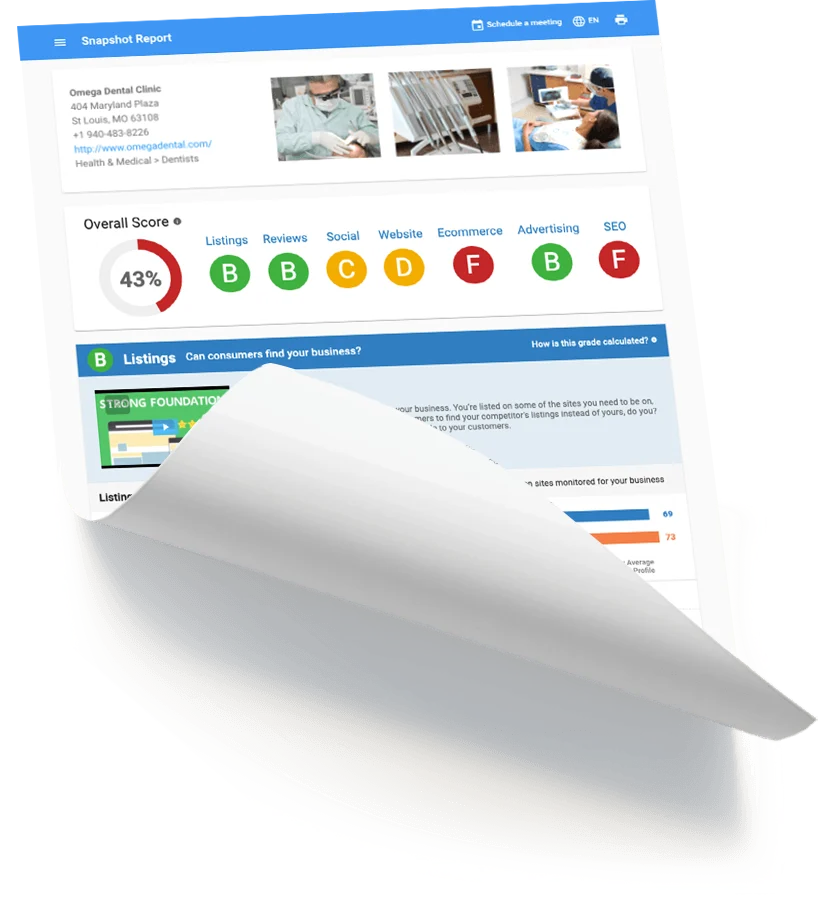
A Trust Signal Snapshot examines the story your business tells, the claims it makes, and the evidence customers can find to decide whether those claims should be believed.
It finds the Trust Gaps: missing information, conflicting signals, unsupported claims, and places where your real strengths aren't obvious to someone who doesn't already know your business.
It also looks at the businesses your customers are likely to consider and compares their trust signals with yours.
The result is a clear picture of what inspires trust, what creates hesitation, and what you can do to close the gaps that keep your business from becoming the obvious choice.
Trust Signals FAQ
What are Trust Signals?
Trust signals are the clues your business leaves online that help people, Google, and AI systems decide whether you look credible, consistent, and worth choosing.
Why are they important to me?
If customers find you through Google, Maps, AI search, or review sites, trust signals help shape whether you’re ignored, considered, or chosen.
Why should I bother with them?
Because visibility alone isn’t enough anymore. Plenty of businesses show up. The ones that get picked usually look more trustworthy.
Are trust signals just reviews?
No. Reviews are a big part of the picture, but not the whole thing. Trust signals also include consistency, recency, completeness, reputation, and how clearly your business presents what it does and where it does it.
Do trust signals affect AI search too?
Yes. AI-driven search tools are more likely to favor businesses with stronger, clearer signs of credibility and consistency.
Can trust signals be improved?
Usually, yes. Most businesses do not have a trust problem because they are bad. They have a trust signal problem because the right signals are weak, missing, or inconsistent.

Which one?
Trust Signals are used to scrutinize every business in your market… The one with most convincing evidence stands out as the obvious choice.
Is it you?
Find out with the Trust Signals Snapshot.
Google doesn't rank businesses anymore … It recommends them based on trust signals 1, 2, 3